Friday, January 27, 2017

Republic Day - January 26th

India has two days of national patriotism - Independence Day (August 15th) and Republic Day (January 26th).

Republic Day is the day India's constitution came into force.

This January 26, 2017, India celebrated its 68th Republic Day!

SOME HISTORY:
After India gained Independence from the British in 1947, the constitution was drafted by the drafting committee at the national assembly on November 4, 1947. The final version of the constitution in both English and Hindi was signed by the national assembly on January 24, 1950, and the constitution came into effect on January 26, 1950.
Since then, January 26th has been celebrated as Republic Day, a day that marked India's full transition into an independent republic.

CELEBRATIONS:
On this day, many military parades are held in Delhi. It's a national holiday so schools, colleges and offices are not operating that day. Older school children are typically asked to compulsorily go to school in the morning to witness the flag hoisting and salute the Indian flag. Then they may go home.
Military parades, displays of military equipment and the Indian tricolor flag are all important symbols on this day.


This year, the chief guest for India's Republic Day parade was the Crown Prince of Abu Dhabi Sheikh Mohamed bin Zayed Al Nahyan. In celebration of India's 68th Republic Day the Burj Khalifa in Dubai, UAE, the tallest building in the world, was lit up in colors of the Indian flag! #INDIA-UAE ties!


THE INDIAN FLAG:
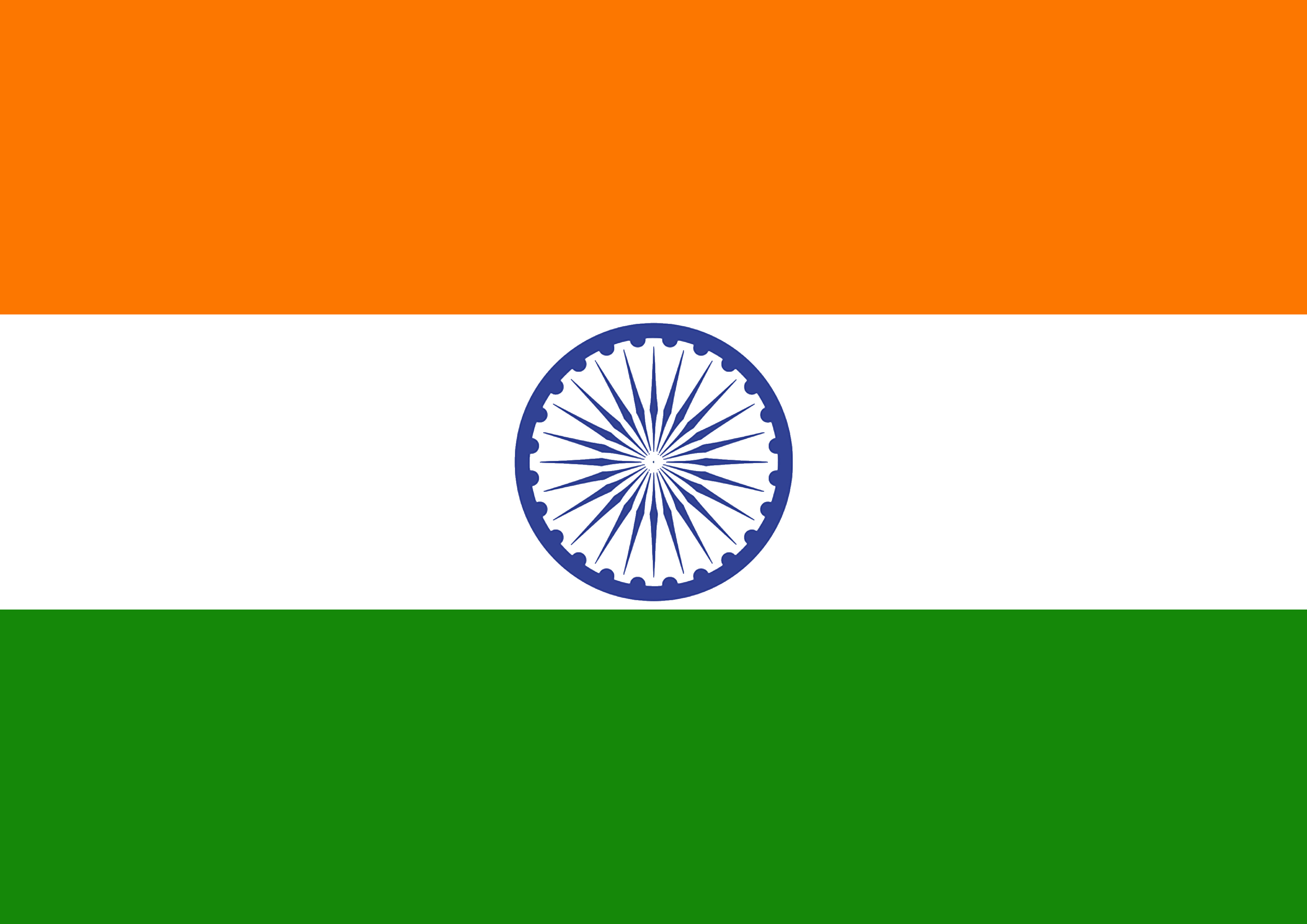
The Indian flag is a horizontal tricolor with saffron on top, white in the middle, and dark green on the bottom. In the center of the flag is a blue Ashoka chakra with 24 spokes. The flag is to be made of khadi material and the width to length dimensions of the flag are to be a 2:3 ratio.
Saffron is a symbol of courage and sacrifice.
White  is a symbol of honesty, peace, and purity.
Green is a symbol of faith, chivalry, prosperity, vibrancy and life.
The Ashoka Chakra or the Dharma Chakra (wheel of law) with 24 spokes appears on a number of the edicts of Ashoka.
For more on the flag and its history, read this.


ALSO, if you are on Facebook, go like the official page for my own new radio show called Desi Tunes! It's a radio show dedicated to playing Indian music of all genres, from all eras, in all Indian languagesYou can suggest music too by messaging or posting to the show's Facebook page (I highly encourage it)! Be sure to tune in on Mondays 2-3pm MST on Blaze Radio 1330 AM for this show! You can tune in from across America and probably in other parts of the world too! Eventually I will try to do Facebook lives and/or upload a full audio recording of the show onto the page so those of you in different time zones can listen! What are you waiting for? Go follow us and like our page!

Thursday, January 19, 2017

Pongal/ Sankaranthi

Pongal

Pongal, also called Sankaranthi, is the South Indian festival that is celebrated on the 14th of January every year as the harvest festival of South India. It signals the end of the traditional farming season. 


The Pongal festival actually consists of four consecutive festivals:

Jan 13 is Bhogi, when old clothes and materials are thrown away and burnt, marking the beginning of a new life for the next year.


Jan 14 is Pongal. It is traditional to boil fresh milk in a pot and let it boil over (literal meaning of “Pongal”). People also make sweets and savories in celebration. Chakkara (Sweet) Pongal is a kind of sweet that is made on this day. A Pooja is usually done where vegetables, sugar cane and spices are offered to the gods.


Jan 15 is Maattu Pongal to thank the cows and bulls. Jallikattu is also played on this day in many places in Tamil Nadu. Jallikattu, an old tradition for the farmers, is a bull taming event. It is fundamentally different from bull fighting seen in Spanish culture. In Jallikattu, money is tied to the bull’s horns and participants are given a chance to tame the bull. Whoever tames it can get the money. But there is a time limit and if the bull wins, the bull is used to service numerous cows and in this way it preserves the native breed. No weapons are allowed and the bull must not be harmed in any way.


Jan 16 is Kanum Pongal or Thiruvalluvar Day. This day is dedicated to the sun god. This day is also a day when all the women, young and old, of a household pray for the welfare of their home and brothers. They go outside in the morning before bathing and place small banana leaves out. On each banana leaf, some Chakkara Pongal, curd rice, sugar cane cut into tiny pieces, and sometimes Ven Pongal, are kept for the birds while the women pray. After this aarti is performed. This ritual is also called “Kaaka Kuruvi Kalyanam” (marriage of crow and sparrow). After this, the women go inside and bathe with some turmeric.


FUN FACT: Many Hindus actually leave some food out for the birds (usually crows) every day. Whenever rice is cooked, a little bit is taken from the top (after offering it to the gods, of course) and set outside. It is only after this that they must eat.

The best thing about Pongal is the sugar cane and the chakkara Pongal, in my opinion. Also, sugar cane juice is amaaaazing!


IN THE NEWS: The sport of Jallikattu has been challenged by People for the Ethical Treatment of Animals (PETA) and they have declared a ban on it for alleged violent treatment of the bulls and accusations of animal cruelty. (Read: All You Need to Know about the Jallikattu Uprising) The people of Tamil Nadu are outraged because this is an almost 2500 year old tradition and the bulls are raised just for Jallikattu now. Without Jallikattu, raising bulls would be for nothing (because everyone uses tractors in fields now). So what about the cows that produce milk? Without the native breed of bulls, the cows would have to be artificially inseminated and the native breed of cows would disappear altogether. Thousands of thousands of Tamilians have been gathered at Marina beach in Chennai in peaceful protest against the ban on Jallikattu for three days now, as of January 19, 2017. Schools, colleges, business establishments and civic agencies have declare a day off on Friday, January 20, 2017, due to the far reaching consequences of the protests.

Thursday, January 12, 2017

Karthigai Deepam and Muruga

Karthigai Deepam and Muruga

December 12th, 2016 was Karthigai Deepam (CAAR-thi-gay DEE-pum) a festival of lights celebrated in Tamil Nadu and Kerala.

Karthigai Deepam is a festival celebrated in the name of the god Muruga, son of Shiva and Parvathi.


The Story of Muruga:

Once upon a time, the devas came to Lord Shiva in the Himalayas to tell him about their troubles because the ashuras had made the devas their slaves. (Deva generally means god and Ashura generally means demon.) Shiva consoled them saying a child will be born who will win in the fight against the ashuras. Then Shiva’s head became six heads, and from each a divine spark was emitted. The devas could not stand the heat and ran away, but Shiva told them not to worry as the sparks would not harm them. Shiva then asked Vayu (god of wind) and Agni (god of fire) to take the six sparks to Ganga (the goddess of water and goddess of the river Ganga in India), who will in turn take the sparks to the Saravana river. Vayu carried the divine sparks for a while, until the heat became unbearable and Vayu took them from him and carried them to Ganga. When the sparks reached the Saravana river, they joined together as one spark, which then became a six headed baby boy. Then six Krithika women arrived there. Seeing the baby, they all wanted to take care of him. Not wanting to cause a fight, the baby split into six babies – one for each of the Krithikas. They took care of the baby until Parvathi arrived. When Parvathi held all six babies together, they rejoined and became one six headed baby boy, who was Muruga. Because he was born on the banks of the Saravana river, he is called Saravanan. Because he was taken care of by the Krithika women, he is called Karthikeya. He is also called Kandha, Kumara, and many other names. Muruga grew up and eventually led the devas to victory in the fight against the ashuras.

Muruga once defeated the ashura Surapadma with his spear, which is his weapon, called a vel (pronounced VALE). The Ashura begged for forgiveness. Muruga then converted the two portions of his slain enemy into a peacock, which will henceforth be his mode of transportation, and a rooster that adorns his flag.


There is another story I would like to share with you. Muruga is Ganesha’s younger brother (Ganesha is also a son of Shiva and Parvathi). Once, Shiva got hold of a divine mango. Apparently it was supposed to taste really good. As any parent would do, he brought the mango home to Mount Kailash, his abode in the Himalayas, and called his sons Ganesha and Muruga. However, Shiva was told that the fruit must not be split in two or its divine taste would be gone. So Shiva decided to hold a competition for his sons and present the fruit to the winner. He said whoever goes around the entire universe three times first would get the fruit. Muruga immediately set off on his peacock and circled the universe. Ganesha however had only a rat as his form of transportation. Ganesha thought of a plan to win. He mounted his rat and circled his parents three times. By the time Muruga finished circling the universe thrice, Ganesha had finished going around Shiva and Parvathi thrice. Shiva gave the mango to Ganesha because he completed the race first. Muruga, enraged, asked why. Shiva explained that to Ganesha, his parents were his whole world, so he circled his parents and in doing so circled the universe. Ganesha got the mango, but Muruga was still furious and stormed off to Palani Hill in South India, and it certainly took a great deal of convincing to calm him down and bring him back. This is why Muruga has yet another name, Palaniyappa.


On Karthigai Deepam, numerous diyas (lamps) are lit and placed outside the house. As usual, a sweet or something is made as an offering to the gods.

I hope you enjoyed reading about Muruga! I would also like to inform you guys that THIS WEEKEND is PONGAL or SANKARANTHI, the harvest festival of South India.

Jan 13 is celebrated as Bhogi

Jan 14 is Pongal

Jan 15 is Maatu Pongal


ALSO, JANUARY 26TH IS REPUBLIC DAY IN INDIA!


So now you know the upcoming holidays.

Sunday, December 18, 2016

Geetha Jayanthi

The Bhagavad-Gita is one of the holy scriptures in Hindu religion. The slokas in it are the advice Lord Krishna gives to Arjuna (or Arjun) right before the Kurukshetra War in the Mahabharatha epic. These slokas are not only advice to Arjuna, but to everyone who reads the Bhagavad-Gita and listens to the advice Krishna gives us. They are lessons for life.
In Arizona, a family of Krishna devotees take Bhagavad-Gita classes for people who wish to learn it. Indian parents send their children to these classes and they themselves sometimes attend classes.
Saturday, December 10th, 2016 (the date changes every year, according to the Tamil calendar, which follows the stars), marked the yearly anniversary of the day Krishna imparted this holy advice to Arjuna. This class of Bhagavad-Gita students celebrated Geetha Jayanthi by presenting some slokas from each chapter with their meanings to the parents present there.
(P.S. I went to this event because my cousins are in this class and they were presenting and I JUST got my driver's license so I wanted to drive and my aunt and uncle let me!)

I took videos of the presentations! Unfortunately, there was something wrong with my phone so i could only take about 3 minute long videos, and that caused me to skip some parts f the presentation. But I'm posting the 13 videos I did take with whatever I captured and I hope you enjoy learning a litle about the Bhagavad-Gita slokas and what they mean!


Monday, November 28, 2016

25 Random Stuff About India


Okay, so it struck me that I haven't really given a good introduction to the culture and lifestyle of India much. People need to understand that India is more than just “culture and colors”. Its richness cannot be described in just those two words. The thing is, there are lots of almost unrelated stuff that all collectively make India the country it is. Therefore, I have compiled a list!


  1. India HAD 28 states and 7 union territories. NOW, it has 29 states and 8 union territories. Two years ago, Andhra Pradesh (A.P.) broke up into A.P. and Telangana. Hyderabad is the joint capital for the next ten years until the new A.P. can form its own capital.
  2. India has about a million festivals. I mean, there's ALWAYS something to celebrate, at least once or twice a month. Especially since India accommodates every religion in the world. We all celebrate Hindu, Christian AND Muslim festivals. More holidays from school! Yay!
  3. The culture, food and lifestyle are usually generally categorized as North Indian and South Indian. South Indian (i.e., of the states Tamil Nadu, Kerala, Karnataka and Andhra Pradesh) culture and festivals are all somewhat similar, while North Indian (basically everything else) culture and festivals are all somewhat similar.
  4. EVERY STATE has their own language and set of cultures, traditions and festivals. Don't even get me started on food.
  5. North Indians all speak either Hindi or a language similar to Hindi because its roots were originally in Hindi.
  6. South Indians speak Tamil in Tamil Nadu, Malayalam in Kerala, Telugu in Andhra Pradesh and Telangana, and Kannada in Karnataka.
  7. Of course, these languages I mentioned are not limited to being spoken within that state.
  8. India has 14 officially recognized languages. And then about a hundred more because regional dialects change ever so slightly and end up becoming different languages.
  9. No one actually speaks Sanskrit, okay? Although kids still learn that in school, which is sometimes mandatory.
  10. India is not all jungle or rural areas. We have cities too. We have busy areas and not-so-busy areas. No, we don't have pet elephants.
    A picture of a part of Chennai, the capital of Tamil Nadu
  11. HOLI IS THE FESTIVAL WHERE PEOPLE THROW COLORS. No, it is not to be confused with Diwali or anything else. Holi is a North Indian festival that is usually celebrated in February or March and is always around annual exam time for school children in India. You'll hear more about this when the time comes.
  12. Hindi is a language. Hindu is a religion. Please don't mix them up.
  13. In the olden days, Indian society was divided into Brahmins, Kshatriyas, Vaishyas and Shudhras.
  14. Today, Hindus are just classified as Brahmins and Non-Brahmins, in general.
  15. Brahmins are staunch vegetarians and extremely religious. They were the families of priests in the olden days. It is said that each Brahmin family is a descendant of a sage.
  16. Non-brahmins are usually non-vegetarians. They have different versions of Hindu traditions.
  17. IF YOU'RE VEGAN, I'M SORRY BUT YOU JUST CANNOT EAT ANY INDIAN SWEETS! We use milk and ghee, along with other milk products and ingredients, in every sweet we make.

  18. Ghee is melted butter. It's actually something VERY common in India and I assumed everyone all over the world knew that melted butter is called ghee. I guess I was wrong. Well, now you know!
  19. The national bird of India is a peacock.
  20. The national flower of India is a lotus.
  21. The national game is HOCKEY.
    Indian Women's Hockey Team, which qualified for the Rio Olympics in 2016, but sadly lost at a crushing defeat to Australia's team.
  22. INDIANS ARE CRAZY ABOUT CRICKET - DO NOT MESS WITH THEM ABOUT THAT OR YOU’LL DIE AN EARLY DEATH.
  23. Also, Indians go CRAZY at weddings. They have different types of weddings all over the country. The ceremonies usually last 3-4 days and there's LOADS of fun!
  24. Contrary to popular belief, most Indians do NOT speak like Raj from Big Bang Theory. Some Indians may have rather comical accents, but most of us are clear speakers. 
  25. A large proportion of the Indian population understand and can speak English to an extent. This tends to take many people by surprise, but the English language is quite common and in some cities, prevalent. In fact, there are many English-medium schools where the primary language the children must speak in at school is English.


That's it for now. Remember, these are just a handful of things everyone should know about India. This isn't even the beginning, believe me. But, for now, I hope you enjoyed reading this!

Wednesday, November 9, 2016

Garba and Raas

Garba and Raas


Ranj is back with another article!
On Saturday, November 5th, I attended an event called USSA presents Garba and Raas at the SDFC (Sun Devil Fitness Complex) on the ASU Tempe campus. This was more of a North Indian event, specifically a Gujarati event (meaning a festival that originated from the state Gujarat in India). Keep in mind that I am a South Indian so this was a new experience for me.


Garba and Raas (or Dandiya) are two forms of Gujarati dances.
Many traditional Garbas are peformed around a centrally lit lamp or a picture/statue of the Goddess Shakti. Garba is performed in a circle of the belief that time is a continuous cycle. As the cycle of time revolves, from birth, to life, to death and again to rebirth, the only thing that is constant is the Goddess, that one unmoving symbol in the midst of all of this unending and infinite movement. The dance symbolizes that God, represented in feminine form in this case, is the only thing that remains unchanging in a constantly changing universe.
Raas or Dandiya Raas is a traditional folk dance form of Gujarat, India, and is associated with scenes of Holi, and Leela of Krishna and Radha at Vrindavan. Along with Garba, it is the featured dance of Navrathri evenings in Western India.
The main difference between Garba and Raas is that Raas is played with Dandiyas (pair of colorfully decorated sticks), while Garba consists of various hand and feet movements. Most of the Dandiya steps require even number of people while in Garba there is no such requirement on number of people.
For Dandiya, sometimes instead of sticks, people also use "Swords". The circular movements of Dandiya Raas are much more complex than that of Garba. As people play with sticks, it is important to be careful while playing Dandiya.
I've captured a few videos of Raas, or Dandiya, for you guys to see!


Tuesday, November 1, 2016

Diwali: The Festival of Lights

Diwali:

The Festival of Lights

Ranjani is back with another post!!!
Last week, I told you about two of the stories behind Diwali.
Saturday and Sunday were celebrated as Diwali, and there was joy and fun everywhere with family and friends. Technically, Saturday was celebrated as Diwali for South Indians while Sunday was celebrated as Diwali for North Indians.

Diwali is actually a 5 day festival in North India.
 Day 1: Dhanteras 
     On this day, people buy gold, new vessels, and other things related to the Goddess Lakshmi (goddess of wealth).
 Day 2: Choti (Small) Diwali or Naraka Chaturdasi 
     On this day, it's just a small pre-Diwali celebration, so they light a few diyas (lamps).
 Day 3: Diwali 
     The actual Diwali celebration take place on the third day, which happened on Sunday, October 30 this year.
 Day 4: Govardhan Pooja 
     On Govardhan Pooja, Lord Krishna is worshiped. Lord Krishna once lifted an entire mountain, Govardhan Parvat (mountain), and held it on his little finger to shelter the people of his village from a terrible storm caused by an upset Lord Indra. To celebrate this, people prepare sweets that are said to be Krishna's favorite.
 Day 5: Bhaidooj 
     Bhaidooj is a day to celebrate brothers. On this day, sisters put a tilak on their brother's forehead and pray for their long life. They feed their brother sweets and their brother in return give his sister gifts.

On Diwali, it is traditional to light diyas (lamps).


People also bust firecrackers and light fireworks on Diwali! There are a great many types of firecrackers and fireworks. I use the distinction firecrackers for the explosive types, typically burst during the day, and fireworks for the beautiful types that produce light and are usually lit at night. My faves are the sparklers, flower pots and rockets! Although, in recent years, many people have begun to avoid crackers due to the immense noise and air pollution, they remain a definite mark of Diwali.

This is a satellite picture taken by NASA from space of India on Diwali in 2011. The entire country is lit up with lights from the festival!

In the below video, you can see different kinds of firecrackers and fireworks one typically sees on Diwali in India. You see them in this order: 
1. Flower pot
2. Redford garlands, called walas, that typically come in strings of 100, 200, 500, 1000, 5000, and 10000. They are therefore called 100-wala, 200-wala, 500-wala, and so on.
3. Some kind of small explosive, categorized under atom bombs.
4. Chakkars, or Chakram in Tamil.
5. A rocket.


Shivakasi is a village in India that is entirely dependent on the sale of firecrackers and fireworks for Diwali. The village specializes in making firecrackers and fireworks all year long for Diwali. You can check out the 2016 list of fireworks!

On Diwali, it is also a custom to wear a new outfit. This, of course, is only supposed to be prohibited if someone has died in the family that year, although the rule is not enforced and it depends entirely on your family.

People spend time with relatives for this festival. Sweets of all varieties and snacks like ‘murukku’, ‘ribbon pakoda’ and ‘thattai’ are prepared (usually beginning from a few days in advance because it takes so much time to make all this stuff) and distributed among family, friends and neighbors on Diwali.

Sweets and snacks prepared for Diwali at my aunt's house for Diwali 2016

Thanks to my friend Bhargav, and some Whatsapp group chats with family and friends, I have acquired videos of the beautiful firecrackers and fireworks of Diwali. 


The above two videos are of Flower Pots.The second one is in slow motion! The one below is of other fireworks similar to flower pots. Notice that the firecrackers and fireworks are lit by sparklers in the video.  In India, they are also usually lit by incense sticks.


Here is a fireworks show on Diwali!


That's me in a half saree with a sparkler. My dad's standing behind me. Happy Diwali!